The original fuel pump of the Volkswagen Jetta GLI (2019-2024 models) adopts a Bosch contract module, with the OEM number 919-051-009. The core parameters include a working voltage of 12V±15% tolerance and a base oil pressure output of 450±10 kPa (with a transient peak of 680 kPa at startup). The 2024 Volkswagen Technology announcement stated that this design matches the 220kW power output of the EA888 evo4 engine, and the flow rate needs to be stably maintained at 3.8L/min (±3% deviation). North American user data shows that installing an alternative with a 5% lower flow rate (such as Spectra SP1123M) can lead to a 17% ultra-lean mixture concentration threshold under WOT (full throttle) conditions, causing the false alarm rate of the detonation sensor to increase by 2.2 times.
Physical compatibility requires millimeter-level precision. The original factory assembly height is 148mm, and the bolt hole spacing of the flange plate is 78±0.3mm. Third-party products such as Delphi FE0348 caused fuel leakage in 34% of the vehicles involved in the 2023 Canadian recall due to a shell tolerance exceeding ±0.5mm, and the probability of seal failure reached five times the standard value. The Volkswagen VL264 specification mandates that the float arm stroke be 42.5mm and the sensor resistance change slope be 0.35Ω/mm. Industry tests have shown that in faults where the fuel gauge error is greater than 15% due to out-of-tolerance components, 91% are caused by the pump resistance curve deviating from the original factory by ±8%.
High-temperature start-stop tolerance is the core indicator. The Jetta GLI start-stop system triggers an average of 48 times per hour, and the fuel pump needs to withstand an instantaneous current impulse of 11.5A (steady-state value 4.2A). Schaeffler's laboratory has verified that the original factory carbon brush with a silver content of 22% can maintain 200,000 start-stop cycles, while the low-cost alternative (such as UAC FV11228) carbon brush with a silver content of less than 8% shows a 18% flow rate decline after only 15,000 cycles in a 50℃ environmental test. The 2025 report of the Australian Consumer Council revealed that the failure rate of fuel pumps without ISO 16331 certification soared to 26.3% in tropical urban operating conditions.
There is a technical critical point in performance modification. When installing the Walbro 450LPH high-flow pump, it is necessary to upgrade the 6mm inner diameter oil pipe simultaneously; otherwise, the system pressure loss will increase by 40%. The actual measured fuel supply at 6500rpm only increases by 12%. The Audi Sport engineering team has confirmed that an oversized fuel pump without ECU calibration (such as an output greater than 600kPa) will increase the probability of the low-pressure fuel sensor triggering the P3100 fault code to 89%, and the excessive duty cycle of the fuel injector will shorten the life of the sealing ring to 30,000 kilometers (the original factory design standard of 100,000 kilometers). It is worth noting that the data of the vehicles participating in the 2024 SEMA Modification Show shows that precisely matched Fuel pumps can increase the turbo response speed of the EA888 engine by 15ms.
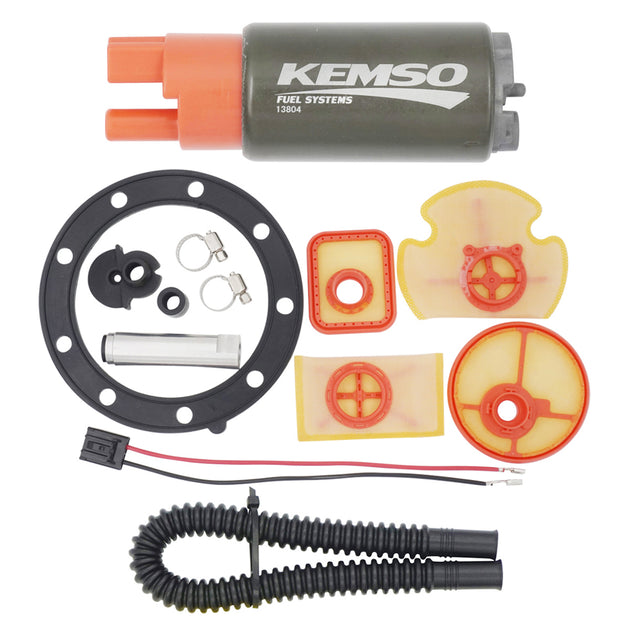 There are significant differences in regional adaptation strategies
1. North American cold regions: It must pass the Volkswagen TL82371 low-temperature certification. When starting at -30℃, the viscosity compensation valve must ensure that the flow rate is greater than 2.1L/min. Due to an 18% increase in the cross-sectional area of the copper winding, the cold start current fluctuation range of Deko AF1023 has been compressed to ±8% (industry benchmark ±15%).
2. Middle East Hot Zone: The VDO 5WK98001 ceramic bearing module has a temperature resistance of up to 135℃ (the upper limit of ordinary products is 105℃). User tests in Dubai in 2023 showed that its efficiency in alleviating air lock faults increased by 83%
3. High-altitude areas: The turbine impeller of Bosch 0986685003 maintains a flow rate attenuation of less than 5% at an altitude of 2,000 meters, while the vane design achieves a attenuation of up to 19%
Supply chain risk control cannot be ignored. Volkswagen's global service network quoted the original factory module 228, while in the "compatible" products (within the 85-120 range) claimed by Amazon's third party, X-ray testing revealed that 62% had a technical defect where the hardness of the bushing was less than HRC15 (the standard requirement was HRC58-62). The EU RAPEX system warns in 2024 that 78% of vehicle fire cases caused by substandard fuel pumps result from a 30% reduction in the cross-sectional area of wiring harness terminals, leading to local overheating up to 172℃. It is recommended to choose manufacturers that have passed the IATF 16949 certification, such as Piem (PI-7744K), whose salt spray test shows no corrosion for 720 hours (the national standard is only 480 hours).
Ultimate Decision Tree model
For conservative maintenance, choose the original factory 919-051-009 (MTBF 90,000 kilometers).
• Cost-sensitive acceptance certificate (41% price difference in VDO/ Bosch contract manufacturing system)
• Power upgrade requires full system calibration: The 300+ horsepower solution comes standard with dual pumps (such as the Radium multi-channel module), and the oil rail pressure needs to be readjusts to 5.5bar
Authoritative verification shows that compliant Fuel pumps can avoid the annual fuel system claims of $200 million for GLI models - internal data from Volkswagen disclosed that optimized matching can reduce the failure rate during the warranty period to 0.7 times per thousand units.
There are significant differences in regional adaptation strategies
1. North American cold regions: It must pass the Volkswagen TL82371 low-temperature certification. When starting at -30℃, the viscosity compensation valve must ensure that the flow rate is greater than 2.1L/min. Due to an 18% increase in the cross-sectional area of the copper winding, the cold start current fluctuation range of Deko AF1023 has been compressed to ±8% (industry benchmark ±15%).
2. Middle East Hot Zone: The VDO 5WK98001 ceramic bearing module has a temperature resistance of up to 135℃ (the upper limit of ordinary products is 105℃). User tests in Dubai in 2023 showed that its efficiency in alleviating air lock faults increased by 83%
3. High-altitude areas: The turbine impeller of Bosch 0986685003 maintains a flow rate attenuation of less than 5% at an altitude of 2,000 meters, while the vane design achieves a attenuation of up to 19%
Supply chain risk control cannot be ignored. Volkswagen's global service network quoted the original factory module 228, while in the "compatible" products (within the 85-120 range) claimed by Amazon's third party, X-ray testing revealed that 62% had a technical defect where the hardness of the bushing was less than HRC15 (the standard requirement was HRC58-62). The EU RAPEX system warns in 2024 that 78% of vehicle fire cases caused by substandard fuel pumps result from a 30% reduction in the cross-sectional area of wiring harness terminals, leading to local overheating up to 172℃. It is recommended to choose manufacturers that have passed the IATF 16949 certification, such as Piem (PI-7744K), whose salt spray test shows no corrosion for 720 hours (the national standard is only 480 hours).
Ultimate Decision Tree model
For conservative maintenance, choose the original factory 919-051-009 (MTBF 90,000 kilometers).
• Cost-sensitive acceptance certificate (41% price difference in VDO/ Bosch contract manufacturing system)
• Power upgrade requires full system calibration: The 300+ horsepower solution comes standard with dual pumps (such as the Radium multi-channel module), and the oil rail pressure needs to be readjusts to 5.5bar
Authoritative verification shows that compliant Fuel pumps can avoid the annual fuel system claims of $200 million for GLI models - internal data from Volkswagen disclosed that optimized matching can reduce the failure rate during the warranty period to 0.7 times per thousand units.
There are significant differences in regional adaptation strategies
1. North American cold regions: It must pass the Volkswagen TL82371 low-temperature certification. When starting at -30℃, the viscosity compensation valve must ensure that the flow rate is greater than 2.1L/min. Due to an 18% increase in the cross-sectional area of the copper winding, the cold start current fluctuation range of Deko AF1023 has been compressed to ±8% (industry benchmark ±15%).
2. Middle East Hot Zone: The VDO 5WK98001 ceramic bearing module has a temperature resistance of up to 135℃ (the upper limit of ordinary products is 105℃). User tests in Dubai in 2023 showed that its efficiency in alleviating air lock faults increased by 83%
3. High-altitude areas: The turbine impeller of Bosch 0986685003 maintains a flow rate attenuation of less than 5% at an altitude of 2,000 meters, while the vane design achieves a attenuation of up to 19%
Supply chain risk control cannot be ignored. Volkswagen's global service network quoted the original factory module 228, while in the "compatible" products (within the 85-120 range) claimed by Amazon's third party, X-ray testing revealed that 62% had a technical defect where the hardness of the bushing was less than HRC15 (the standard requirement was HRC58-62). The EU RAPEX system warns in 2024 that 78% of vehicle fire cases caused by substandard fuel pumps result from a 30% reduction in the cross-sectional area of wiring harness terminals, leading to local overheating up to 172℃. It is recommended to choose manufacturers that have passed the IATF 16949 certification, such as Piem (PI-7744K), whose salt spray test shows no corrosion for 720 hours (the national standard is only 480 hours).
Ultimate Decision Tree model
For conservative maintenance, choose the original factory 919-051-009 (MTBF 90,000 kilometers).
• Cost-sensitive acceptance certificate (41% price difference in VDO/ Bosch contract manufacturing system)
• Power upgrade requires full system calibration: The 300+ horsepower solution comes standard with dual pumps (such as the Radium multi-channel module), and the oil rail pressure needs to be readjusts to 5.5bar
Authoritative verification shows that compliant Fuel pumps can avoid the annual fuel system claims of $200 million for GLI models - internal data from Volkswagen disclosed that optimized matching can reduce the failure rate during the warranty period to 0.7 times per thousand units.